The Journal: Thoughts on connection
London is rarely silent.
There’s the rhythm of trains beneath the pavement, conversations folding into one another in cafés, footsteps moving with purpose down crowded streets. From the outside, it looks like connection is everywhere.
And yet, many people move through the city feeling unseen.
Connection, we’re often told, is about numbers. How many friends you have. How many messages are waiting. How many plans fill your calendar. But connection rarely lives in volume. It lives in attention.
It lives in the experience of being fully met for a moment — without interruption, without performance, without needing to be anything other than what you are that day.
Modern life has made interaction constant, but presence rare.
We reply quickly.
We scroll endlessly.
We schedule weeks in advance.
But how often do we sit across from someone with nowhere else to be?
There’s a quiet difference between being surrounded and being accompanied.
Being surrounded can still feel isolating. You can stand in a full room and feel the weight of your own thoughts. You can finish a long workday of meetings and realise no one actually asked how you are — not professionally, but personally.
Accompaniment is simpler.
It is two people sharing space — physically or virtually — without an agenda beyond the time itself. It’s conversation that doesn’t need to resolve into advice. Silence that doesn’t feel awkward. A walk that doesn’t need a destination.
Connection doesn’t always arrive as intensity. Often, it arrives as steadiness.
A familiar face.
A recurring conversation.
A moment that repeats each week and quietly becomes part of your rhythm.
There’s something deeply regulating about that kind of presence. Not because it solves anything, but because it reminds you that your experiences don’t exist in isolation.
You don’t have to be in crisis to want connection.
You don’t have to justify it.
And you don’t have to earn it by being interesting, cheerful, or productive.
Sometimes connection is simply this:
Time shared.
Attention given.
Nothing more required.
In a city that rarely slows down, choosing to sit with another person — even briefly — can feel like a small act of resistance.
A pause.
A breath.
A reminder that being human was never meant to be done entirely alone.
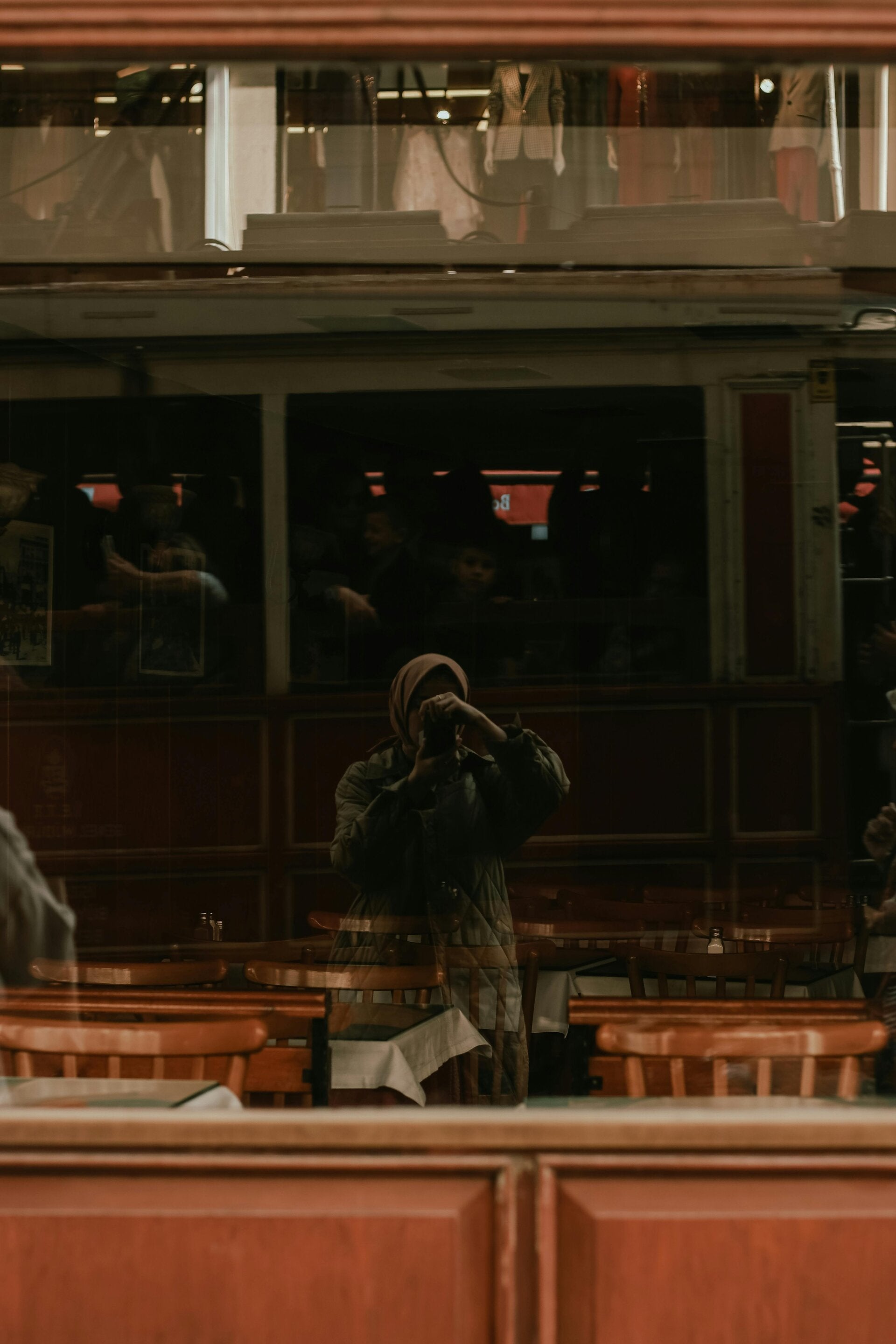
Navigating modern city life
There’s a particular rhythm to modern city life.
The morning commute. The movement of people who rarely make eye contact. The quiet choreography of headphones, screens, and half-finished thoughts. London is full — full of noise, ambition, conversation, deadlines — and yet it can feel strangely solitary.
You can spend an entire day surrounded by others and still not feel met.
In many ways, the city rewards independence. It moves quickly, and it assumes you will too. You build a routine. You learn which carriage is quieter. You find your café. You become efficient at existing among millions without colliding too deeply with any of them.
And sometimes, that efficiency becomes distance.
Modern city life offers opportunity, stimulation, and possibility. But it also asks a quiet question: Where do you slow down enough to feel connected?
Not connected in a digital sense. Not connected through productivity or performance. Just connected in the simplest way — being present with another person.
It’s easy to assume that loneliness in a city means something has gone wrong. That you should be networking more, joining more groups, replying faster, trying harder. But often it’s not about effort. It’s about structure.
Cities are built for movement. They are not naturally built for pause.
Navigating modern city life may mean creating your own pauses. A conversation without an agenda. A walk without a destination. A coffee that isn’t squeezed between meetings. Time that isn’t optimised.
These moments don’t need to be dramatic to matter. In fact, their ordinariness is what makes them grounding.
To sit across from someone and speak without editing yourself.
To walk beside someone without needing to entertain them.
To share space without expectation.
In a city that rarely stops, even small pockets of presence can feel steadying.
Modern life will likely continue to accelerate. There will always be new apps, new buildings, new demands on attention. But the fundamentals remain surprisingly simple.
We are not only built for productivity.
We are built for proximity.
For being seen, even briefly.
For knowing that someone else is here too.
Navigating city life isn’t about escaping it. It’s about learning where to soften within it.
Sometimes that begins with something small: a shared table, an unhurried conversation, a little less rush.
And the quiet recognition that even in a vast city, connection is still possible.

Everyday moments, meaningful connections
There’s a quiet misconception about connection — that it has to be significant to matter.
We’re taught to look for big conversations. Breakthroughs. Long dinners that stretch into the night. The kind of interactions that feel cinematic.
But most connection doesn’t look like that.
Most of it happens in ordinary moments.
A coffee cooling between two people.
A shared observation about the weather.
Walking side by side without needing to fill every silence.
In a city like London, life moves quickly. We are surrounded by people — on trains, in offices, in cafés — yet much of the time we are alone inside our own thoughts.
It’s easy to assume that if something meaningful were going to happen, it would feel bigger.
More intense.
More dramatic.
More obviously important.
But often, what changes how we feel isn’t intensity — it’s presence.
There is something quietly steadying about sitting across from another person who isn’t distracted. Who isn’t checking the time. Who isn’t trying to fix you or impress you.
Just someone there.
Conversation doesn’t need to be profound to be real. It can move gently — from work frustrations to weekend plans to memories of somewhere you once lived. It can wander. It can pause.
Sometimes, the most meaningful part isn’t what’s said at all. It’s the sense that, for an hour, you didn’t have to carry your inner world alone.
We underestimate the power of shared ordinary moments.
A museum visit where neither person feels pressure to analyse the art.
A quiet afternoon working at the same table.
A walk through a familiar park that somehow feels different simply because it’s shared.
Connection isn’t always about depth. Sometimes it’s about continuity — knowing that someone will show up again next week. That there is a small, reliable rhythm in the middle of a busy life.
In a culture that prizes productivity and performance, simply spending time together can feel almost radical.
No agenda.
No outcome.
No requirement to become anything.
Just two people sharing a slice of the day.
And often, that is enough.

A moment of calm reflection
There’s a particular kind of quiet that only happens in London when you stop moving.
Not the silence of the countryside — that’s different.
This is the quiet that exists underneath the noise. The pause between trains. The moment before a café fills. The soft clink of a cup returning to its saucer.
It often arrives unexpectedly.
You’re sitting across from someone. Or perhaps sitting alone. The conversation slows. No one rushes to fill the space. Outside, the city continues — buses exhale at the kerb, footsteps pass, a door opens and closes — but at your table, time softens.
In that moment, nothing needs solving.
You’re not trying to impress anyone.
You’re not explaining yourself.
You’re not optimising your life.
You’re simply there.
We don’t always realise how rare that feeling has become. Modern life is full of constant adjustment — messages to answer, updates to post, decisions to make. Even our downtime can feel performative.
But calm reflection isn’t dramatic. It doesn’t announce itself.
It might look like:
Watching light shift across a café wall
Noticing the rhythm of someone speaking
Letting a thought pass without needing to analyse it
Sharing a silence that feels comfortable rather than awkward
There is something quietly grounding about being in the presence of another person without expectation.
No agenda.
No role to play.
No outcome required.
Just two people existing in the same space for a while.
Often, after moments like this, people don’t say, “That was profound.”
They say, “I feel better.”
Or, “That was nice.”
Or sometimes nothing at all — just a softer expression as they leave.
Calm reflection isn’t about insight.
It’s about permission.
Permission to slow down.
Permission to be unremarkable.
Permission to take up space without explanation.
In a city that rarely pauses, even a small moment of stillness can feel significant.
Sometimes, that’s all we’re really looking for.